04Journal
Anatomy of an operational bot: how automation saves 1,000 hours a year
The automations that save real time are never a chatbot. They are small, boring workflows built around one person's routine. This is how I design them, and how I measure the result.
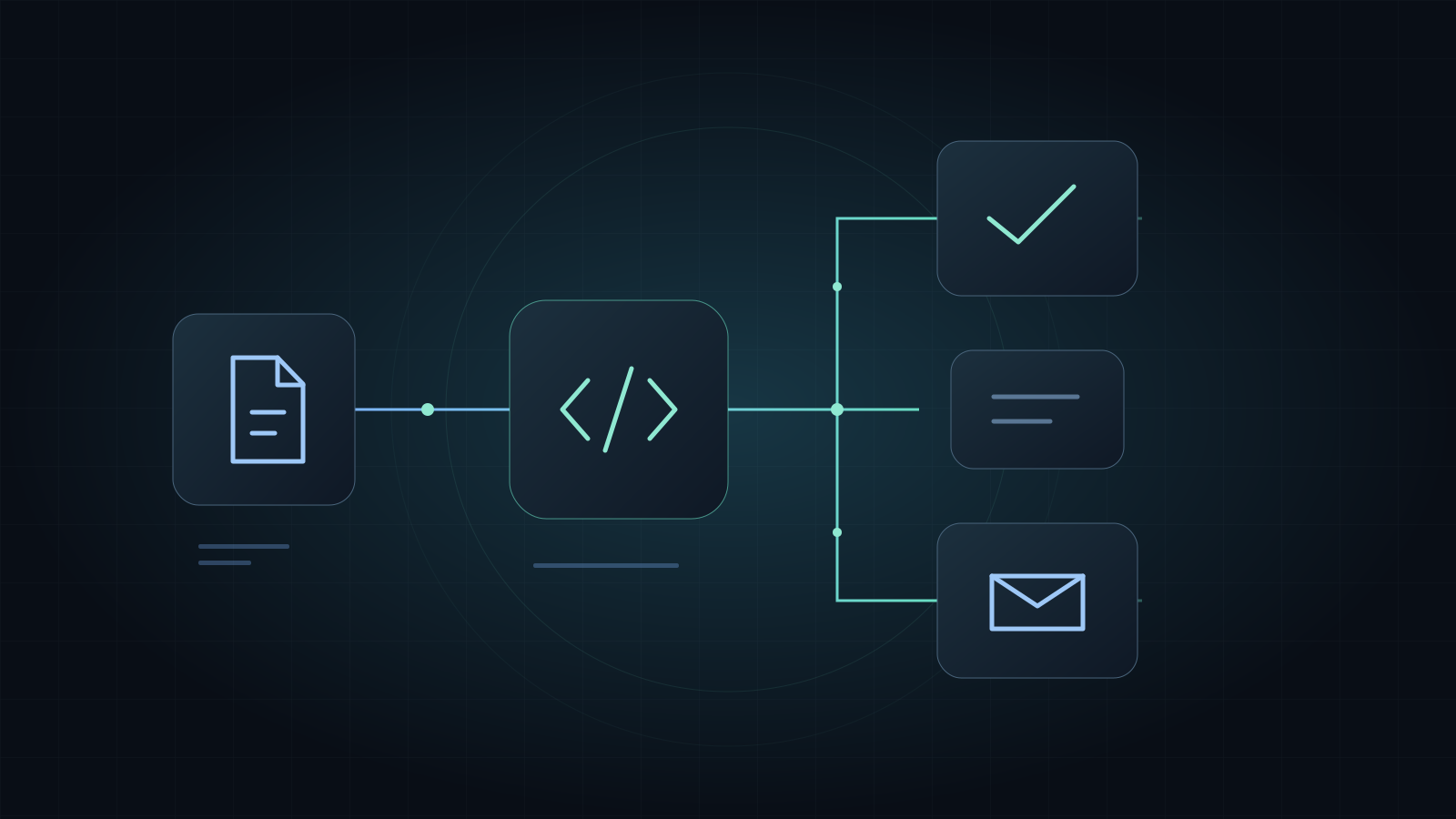
When I say that some automation systems I built save more than 1,000 work hours per client per year, people picture a clever AI assistant. The reality is less glamorous and more useful: a handful of narrow workflows, each removing one recurring chore, measured over a year.
Start from the routine, not the technology
The first week of an automation project has no code in it. It has a calendar and a notebook. I sit with the owner and map what actually happens on a Monday, on the last day of the month, when a customer calls, when a document arrives.
The map always shows the same pattern: a small number of recurring steps that consume a disproportionate amount of time because they are interruptions. Retrieve a file. Check a status on a portal. Send the same reminder. Copy figures into a report. None of them is hard. All of them break concentration.
The five verbs
Nearly every step falls under one of five verbs, and each verb has a typical shape in code:
- Retrieve — pull information from where it lives (a database, a portal, an inbox) and bring it to where the person is. Often browser automation, because the portal has no API.
- Remind — watch a date or a condition and speak up at the right moment, in the right channel.
- Decide — prepare a decision: gather context, compare options, propose. This is where AI reasoning belongs, behind a strict schema and with a human approving the outcome.
- Report — assemble the same numbers on the same day, without anyone opening a spreadsheet.
- Alert — notice an exception (a missing document, a stalled practice, an unusual figure) and route it to a person.
A "bot" is just a bundle of these verbs wired to one person's context.
Where AI belongs — and where it does not
Large language models are excellent at reading messy input and producing structured output: extracting fields from a scanned document, classifying an email, drafting a summary. They are poor at being the system of record.
So the rule is simple. AI reads and proposes. Code decides what is allowed. A person approves what matters. Every AI step returns a typed object, is validated, is logged, and can be rejected. No automated action is taken that cannot be reversed.
Measuring hours honestly
The 1,000-hour figure is not an estimate made after the fact. It comes from the routine map: each recurring step has a frequency and a duration, measured before the system exists. After launch, the system logs how many times each workflow ran. Frequency times duration, minus the review time the person still spends, gives saved hours.
Some steps save two minutes a day. Others save half a day a month. Across a year and across an owner's full routine, the total is often above 1,000 hours — roughly half of a full-time position returned to the business. For the clients where I measured it, that was the result. It is not a promise for every business; it is what disciplined measurement showed.
Why "personal" matters
Generic automation tools fail for the same reason generic software does: they force the routine to fit the tool. A personal automation system does the opposite. It knows this owner reviews payments on Thursdays, that this supplier always sends PDFs in the wrong format, that this portal requires a specific sequence of clicks.
That specificity is not a limitation. It is the whole point.
Continue reading
All articles
30 July 2026
Row-level security is where your business rules should live
Hiding a button is not authorization. For systems that hold other people's documents, the database has to enforce who sees what. Notes from building on PostgreSQL and Supabase.
12 May 2026
Italian bureaucracy is a software problem
After years inside CAF and Patronato offices, I stopped seeing forms and started seeing state machines. Here is what that changes when you build systems for service businesses.